About SkillRev
SkillRev is at the forefront of AI research. We tackle interesting LLM use cases for our clients as well as for internal usage. Below, we have documented a part of our journey during this interesting time in 2026 - where local use cases are increasingly possible. If you’re wrestling with any aspects of production AI workload adoption, we are here to support you! Let’s talk.
Overview
There's a quiet fear most SaaS teams won't admit. What if the model fails in front of the customer?
Wrong aggregation pipeline. Wrong report. Wrong business decision. Trust disappears too quickly.
So when a wave of new open-source models started dropping — GLM-5, MiniMax M2.5, and Step 3.5 Flash — the reaction wasn't excitement. It was tension.
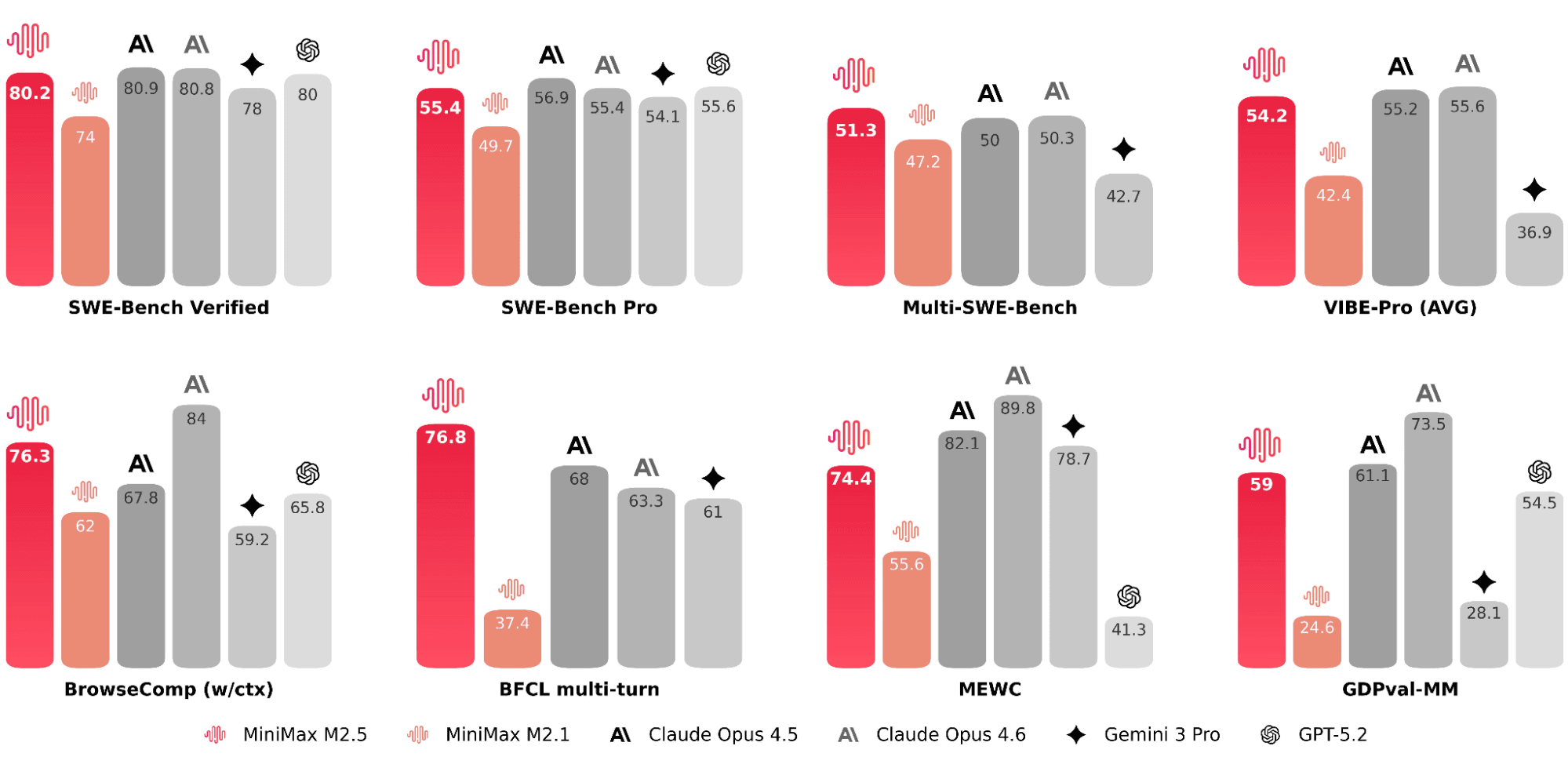
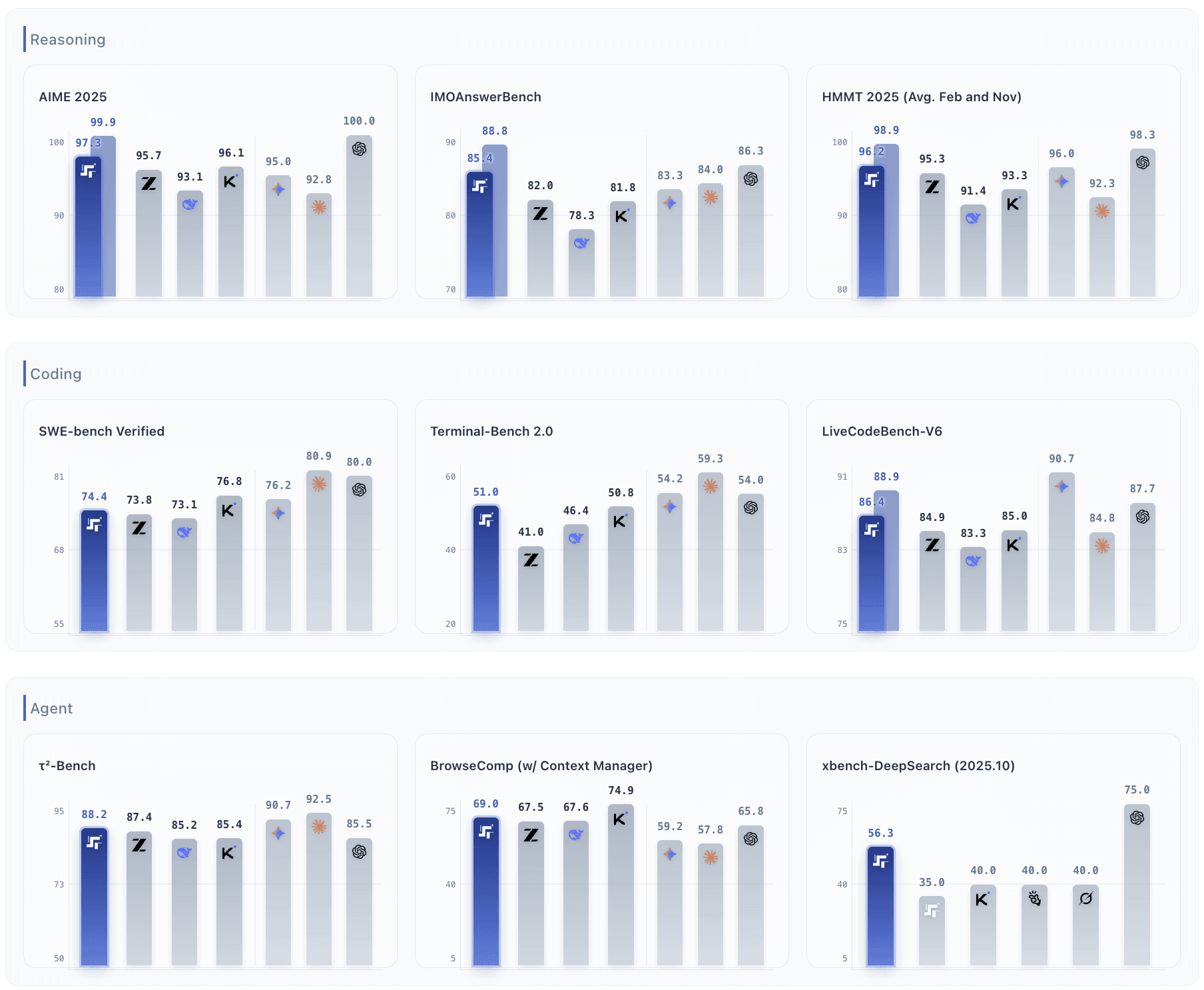
These weren't just incremental models, like those often covered in weekly LLM podcasts. These engineers were boldly claiming frontier-level coding and reasoning performance. GLM-5 launched with a massive MoE architecture and a 200K token context window aimed at long-form reasoning and coding tasks. MiniMax M2.5 positioned itself as a near-state-of-the-art solution in coding benchmarks at a tiny fraction of the cost of closed models. Step 3.5 Flash proposed a balance of inference efficiency and agentic reasoning to make open-source intelligence viable at scale. Kimi K 2.5 was competing with Opus 4.6 as an agentic coder, and few could tell the difference.
Intelligence vs Price - Kimi K 2.5 (and the Frontier Ecosystem)
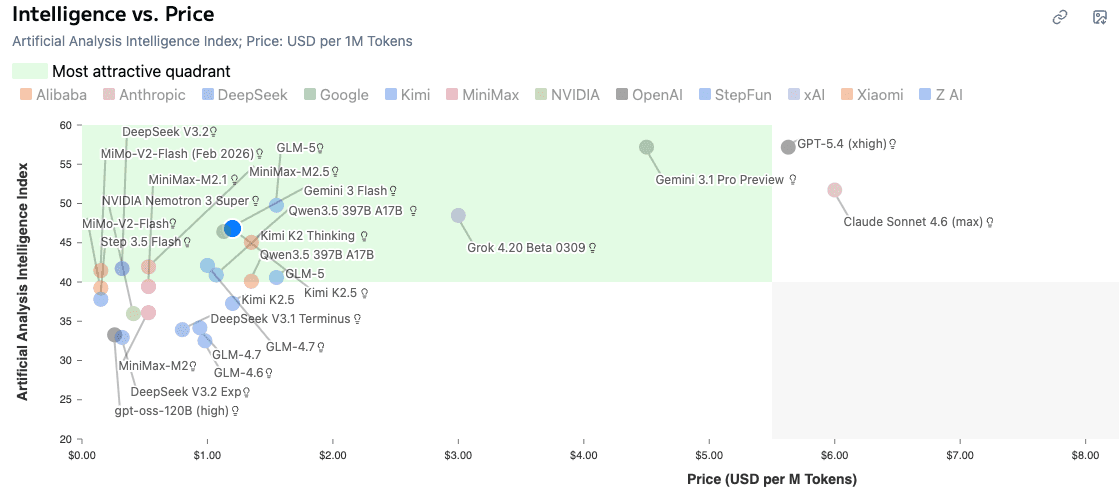
Minimax M2.5 Benchmark
Step 3.5 Flash Benchmark
Benchmarks were intriguing — but benchmarks don't run SaaS products.
The Hype vs. the Hardware Reality
At first glance, the math looked exciting. The open-source moment seemed upon us.
But then we pulled up the hardware bill for another trending model, Kimi K2.5, that we were initially chasing, and the excitement dissolved fast:
- ~595 GB for model weights
- + 100–150 GB KV cache
- + activation overhead
- Total: ~700+ GB VRAM
Even with aggressive quantization, we were still well above 400 GB of GPU memory. This could have an ROI if we kept the model fully engaged, but at that level of hardware?
That isn't an experiment. That's infrastructure debt!
And we were suddenly faced with an uncomfortable truth:
Most discussions about open-source models ignore the hardware bill — until it arrives on your invoice.
If we were going to take this seriously, it couldn't be hype-driven. It had to be grounded in economics and real performance.
If We're Going to Test This, Let's Test It Fairly
We didn't want to give open-source a superficial look. We designed a rigorous evaluation — one that could embarrass an open-source model before it embarrassed us in production.
Instead of hand-crafting prompts by opinion, we used frontier systems themselves to generate the test set. We asked GPT-5 and Gemini to produce engineering-oriented challenges across categories including:
- FastAPI backend systems
- MongoDB aggregation logic
- React architectural decisions
- Concurrency and retry workflows
- Distributed system edge cases
Over 60 prompts emerged — some short, some sprawling thousands of tokens — covering the kinds of tasks that show up as real feature work tickets for our teams across various industries, not toy examples.
Measuring Instead of Guessing
We built a custom evaluation harness in Python that did more than score outputs qualitatively. For every run, we captured:
- Time to first token
- Full response latency
- Decode tokens per second
- Token consumption per task
- Structured output validity
- MongoDB operator correctness
- Differencing against expected query results
There were no guessing games. Every metric was logged.
We executed the suite on standardized GPU infrastructure — NVIDIA A100-80GB instances provisioned via the RunPod SDK — so every run was on the same hardware, same concurrency, and fully reproducible.
Under load, Qwen3 averaged about 110 decode tokens per second and roughly ~1.6 ms time to first token, with ~200,000 tokens per dollar in CPU cost efficiency.
This wasn't "looks promising." This was data.
Where Open Source Actually Shines
When it came to backend tasks, structured query logic, obvious error conditions, CRUD patterns, and deterministic workflows — models like Qwen3 handled them well.
The code was readable. Query pipelines were valid. Summaries made sense.
For a SaaS environment where outputs feed real reporting systems, this was a necessary baseline.
Where they struggled was in distributed consensus reasoning and truly ambiguous algorithmic design — those were still frontier-API territory.
That created a map of capability boundaries — which is what real engineers care about when making product decisions.
The Only Test That Truly Matters
All of this still would've been academic — until we put it to work inside Aiden, our SaaS analytics platform. Aiden lets users:
- Analyze databases like Snowflake, PostgreSQL, and MongoDB
- Upload and analyze CSV, XLS, and similar files
- Ask questions in natural language
- Generate structured reports based on real data
Behind the scenes: FastAPI backend, Next.js frontend, real live queries against real user data.
If the model misgenerates a MongoDB pipeline, the business gets bad data. There's no "close enough."
So we made a decision we were nervous about: we swapped our Frontier API model for hosted Qwen3 Coder inside controlled Aiden flux tests. Not permanently. Not blindly. But long enough to see what would break.
MongoDB Became the Proving Ground
We tested real user-style queries like:
- "Show revenue grouped by region for the last 90 days."
- "Identify customers with more than 5 purchases and segment by average order value."
- "Aggregate monthly trends from nested transaction arrays with lookups."
These are not trivial. They require multi-stage aggregation pipelines, nested document handling, $lookup joins, projection optimization, and business-ready summaries.
On earlier open-source models, this is where operator hallucinations and missing stages appear.
But this time? It was different.
Generated pipelines were valid. Operators were correct. Grouping and nested logic worked. Summaries read like business intelligence commentary. Latency stayed acceptable. Stability held.
It wasn't flawless — but it was operationally viable. That's a very different standard from "pretty good on benchmarks."
The Strategic Shift
At some point, the tension didn't feel the same anymore. The question stopped being:
"Is Qwen3 as smart as GPT-4o?"
And became:
"For Aiden's workload, is the quality gap small enough that economic and deployment control matter more?"
Once quality crossed the viability threshold:
- Token cost started impacting the margin
- Throughput became a scaling lever
- Vendor lock-in became a strategic risk
- Infrastructure control became an asset
Open-source hadn't "won." It aligned with our product's needs.
What This Actually Means
Open-source models like Qwen3, GLM-5, MiniMax M2.5, and Step 3.5 Flash are not universal shortcuts to frontier capability — but they are no longer toys.
They are production-ready in structured, deterministic workflows like:
- Database query generation
- Backend architectural work
- CRUD-centric features
- Report generation
They are still weaker in:
- Deep distributed consensus
- Ambiguous algorithm invention
- Highly novel reasoning not grounded in structure
The value isn't in "open source vs closed" ideology. It's in boundary awareness.
Why This Matters
Open-source expertise doesn't mean rejecting frontier APIs. It means having options:
- If APIs serve your needs — great.
- If economics matter, you can self-host.
- If data sensitivity is critical, you have control.
The real competitive edge isn't "which model is best." It's:
- How do you evaluate thoroughly
- How do you measure reproducibly
- How do you understand where models break
- How do you integrate them safely so that they succeed
That's the difference between bleeding edge and bleeding in production.
If You're Considering Self-Hosted or Hybrid AI
If your product relies on structured database analytics, high-volume inference, cost-sensitive workloads, or data-sensitive deployments — open-source models like Qwen3 (and the emergent ecosystem around Kimi K 2.5, GLM-5, etc) may already be viable for part of your stack.
But don't rely on charts.
Build the harness. Measure the latency. Map the failure boundaries. Then deploy where you know your system will succeed.
Because the real question isn't: "Is open-source as good as frontier?"
It's: "Do you understand your system well enough to know when it is?"