Welcome to the start of a very ambitious idea: documenting what goes into architecting a system.
Of course, this series is just an attempt to scratch the surface. But it will make a serious attempt at covering the major steps at a level that is detailed enough without being too daunting. The goal is to explain things in a way that is easy to understand and remember.
We start this series with the foundations of system architecture, covering:
- Requirements
- System design guidelines
Requirements
There are functional requirements and then there are non-functional requirements.
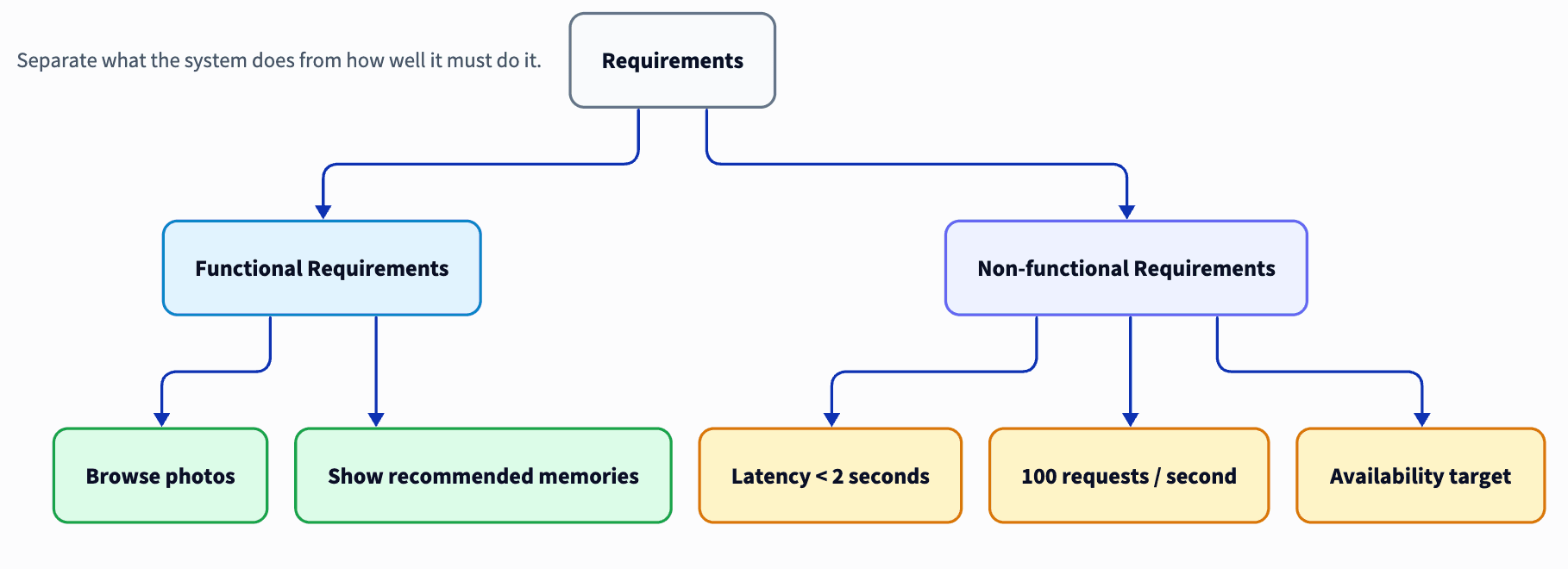
Functional requirements describe what the system must do. They may involve users, external systems, automated processes, or internal components. Examples of functional requirements include:
- The user should be able to browse photos.
- The system should analyse photo-browsing telemetry to recommend memories to the user.
Non-functional requirements describe how well the system should perform and the constraints under which it must operate. Some non-functional requirements may result in additional functional requirements.
It is always a good practice to quantify them. Instead of saying that the system should be fast, handle concurrent users, be robust, or be reliable, one can state:
- Latency: less than 2 seconds
- Throughput: 100 requests per second
- Fault tolerance:
- One service going down should not mean that the whole system goes down.
- Errors during processing or small downtimes during internal communication should not result in data loss.
- Availability: define a specific target, such as 99.9%.
| Availability | Downtime per Year | Downtime per Month (avg.) | Downtime per Week |
|---|---|---|---|
| 90% (1 nine) | 36.5 days | 3.04 days | 16.8 hours |
| 99% (2 nines) | 3.65 days | 7.31 hours | 1.68 hours |
| 99.9% (3 nines) | 8.76 hours | 43.8 minutes | 10.1 minutes |
| 99.95% | 4.38 hours | 21.9 minutes | 5.05 minutes |
| 99.99% (4 nines) | 52.56 minutes | 4.38 minutes | 1.01 minutes |
| 99.995% | 26.28 minutes | 2.19 minutes | 30.2 seconds |
| 99.999% (5 nines) | 5.26 minutes | 26.3 seconds | 6.05 seconds |
| 99.9999% (6 nines) | 31.5 seconds | 2.63 seconds | 0.60 seconds |
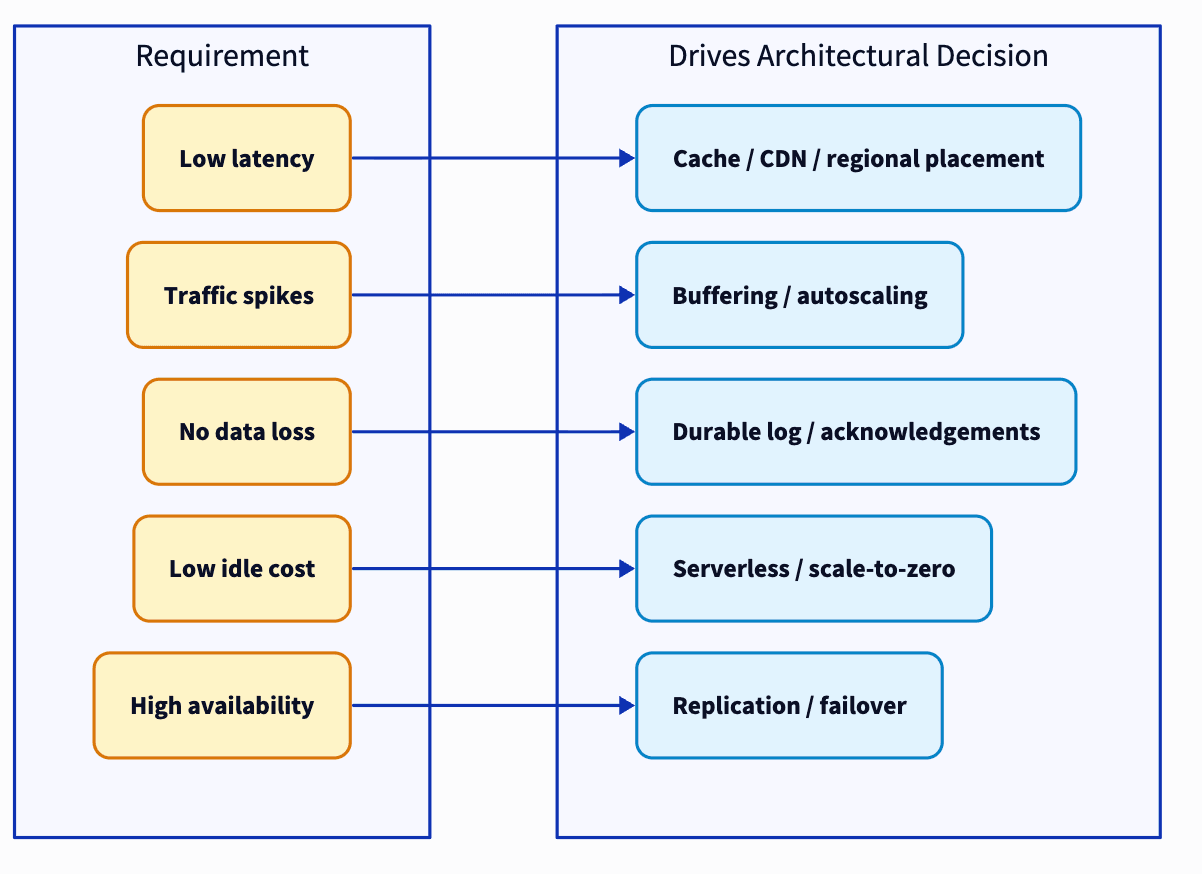
Requirements drive architectural decisions. It is also worth noting that some systems have table-stakes requirements-capabilities that users simply expect the system to provide.
System Design Guidelines
Before we dive into the various aspects of system design, let’s touch upon a few of the driving guidelines behind designing a system.
Extensibility, flexibility, and decoupling help a system grow without turning into spaghetti.
Extensibility
You should be able to extend the functionality of your system by connecting or plugging in additional components without major changes to the existing system.
Flexibility
The system should be flexible enough for you to switch between different modes, enable or disable parts of the system, and make changes easily-in short, it should be a non-rigid system.
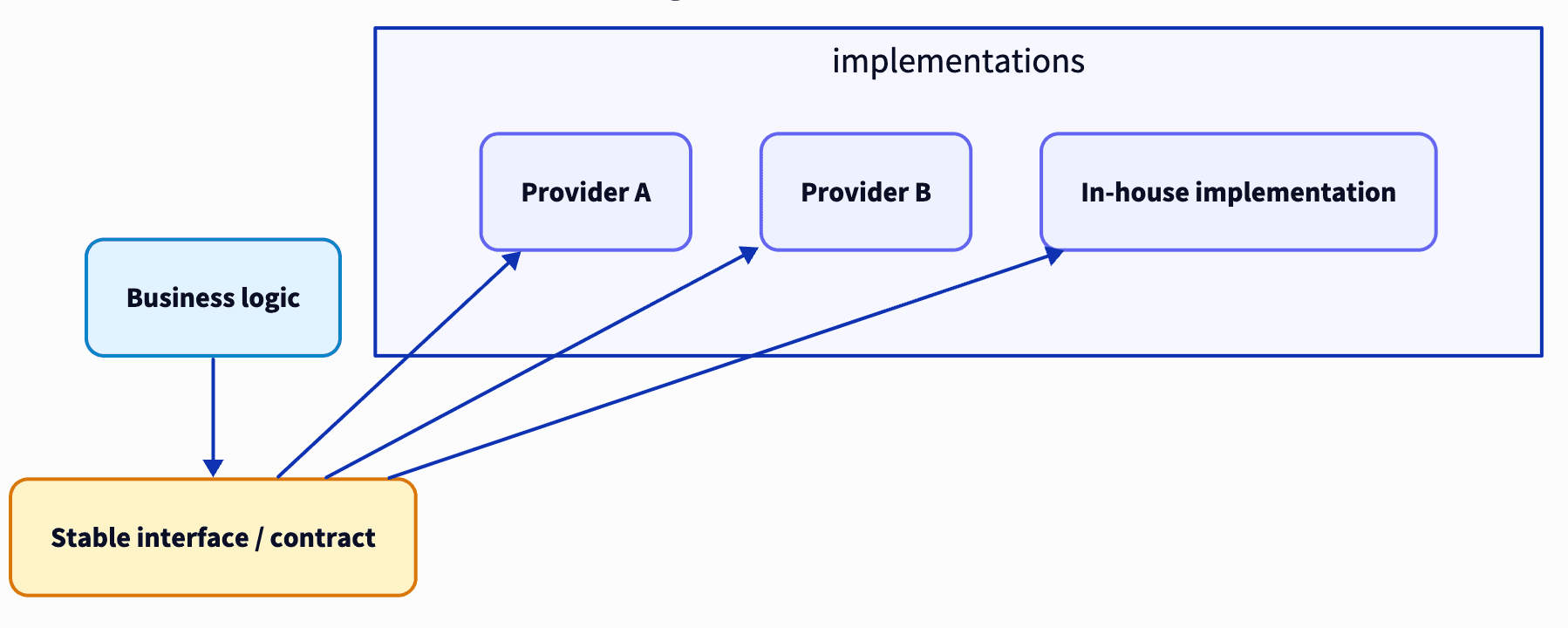
One approach is to design around interfaces. By doing so, you preserve the ability to swap providers (concrete implementations), which helps you avoid rework in connected modules and select implementations dynamically based on configuration or runtime conditions.
Decoupling
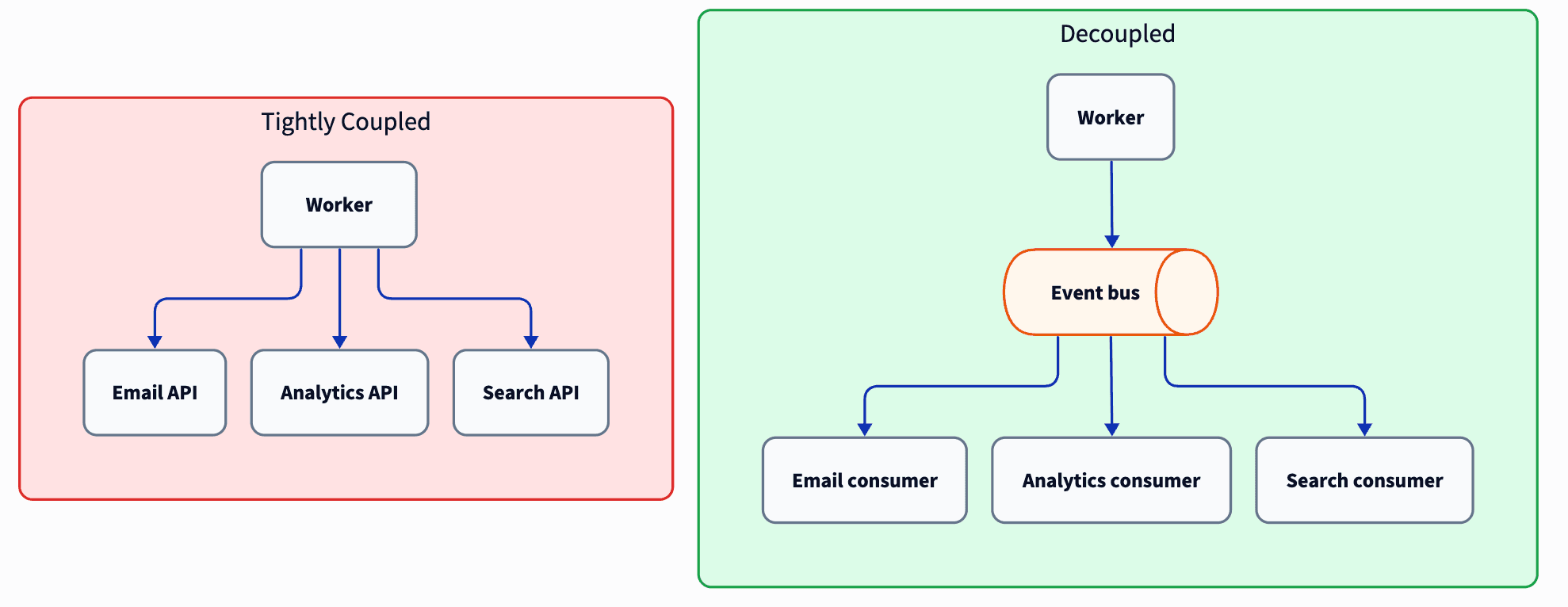
This goes hand in hand with extensibility and flexibility.
The system works together as a whole, but that should not stop you from being able to swap components in and out with alternatives that offer similar functionality and maintain the same interface, without requiring widespread changes elsewhere in the system.
When a system is decoupled, separation of concerns makes a lot of things easier:
- Mocking components during automated testing and CI/CD pipelines
- Independent versioning and deployment of components
- When a buffer exists between components-more on this later-the temporary failure of one component does not immediately block the other.
Cost and Resource Utilisation
The practical constraint preventing a more complex architecture is cost and utilisation efficiency.
Advanced sharding, globally distributed services, multi-region failover, Kubernetes-operated clusters, large, automatically managed node pools, and always-on machines for contingency workloads must be justified by the system's requirements and budget.
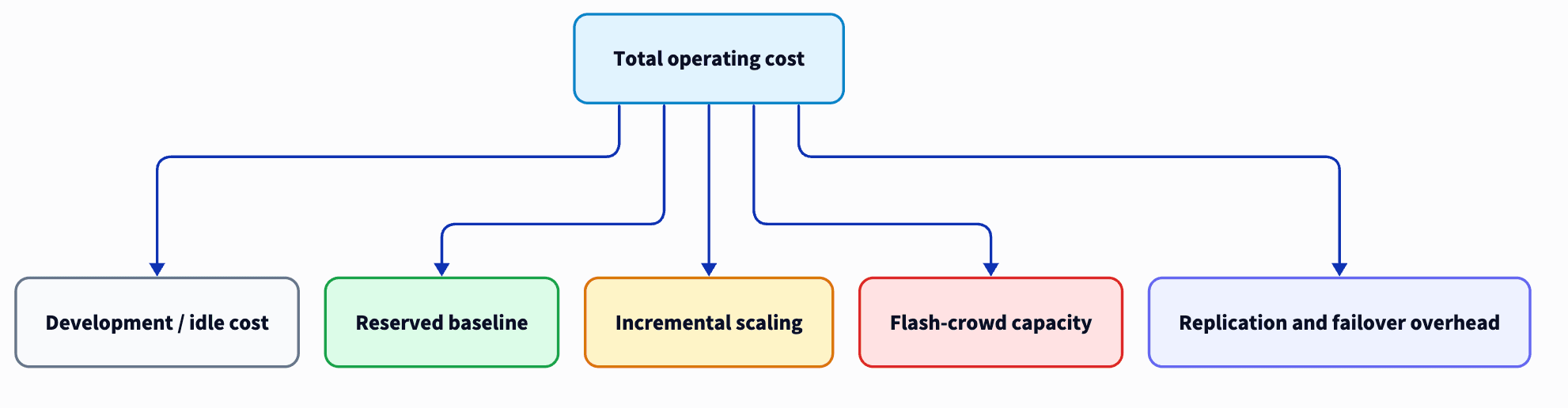
You need to define a budget for various scenarios:
- No-user or development-only workload: The cost of running the system when it has no users and is used only by developers. Food for thought: if all developers follow the same working hours, why keep the entire system running outside those hours?
- Baseline cost: The cost you will incur on a regular day.
- Incremental scaling cost: The additional cost you will incur as the system scales on a regular day.
- Flash-crowd events: The cost you will incur during infrequent but anticipated traffic spikes, after considering pre-provisioned or reserved servers.
- Reserved baseline cost: Cloud providers often allow you to commit to reserved capacity or usage plans at discounted rates.
Conclusion
I hope you liked this introduction to the foundations of system architecture.
These foundations may look simple, but they influence almost every architectural decision that follows. Before selecting databases, queues, cloud services, or deployment platforms, you need to understand what the system must do, how well it must do it, and how much you can afford to spend while doing it.
Next, we will cover communication and flow design.